
Halifax Unit Release Outcomes
Halifax Correctional Unit is a state prison operated by the Virginia Department of Corrections. A person completing a state term may discharge from VADOC custody or may leave the institution on parole or another supervision term. Parole means the person serves the eligible balance of a sentence in the community under rules. Probation is court-ordered supervision and can also follow confinement. In either situation, leaving the prison building does not always mean the legal sentence or supervision has ended.
A transfer to another VADOC institution is not release. The state locator may display a new facility after processing. A move to a probation-and-parole district can support that the person left institutional custody for community supervision. A detainer can send the person to another custodian when the VADOC term ends. Confirm the outcome by reading the locator status and location together, then compare them with the notification-of-release letter, signed release conditions, VADOC record, and court sentence when available.
| Recorded outcome | What it means | Best confirmation |
|---|---|---|
| Transfer | State custody continues at another institution | VADOC locator and movement record |
| Parole | Institutional custody ends while supervision continues | Release letter, conditions, locator, district |
| Discharge | The relevant VADOC term ends | Release letter and VADOC record |
| Detainer transfer | Another authority takes custody | Release order and destination custodian |
Search Halifax Unit Releases
The official VADOC Inmate and Supervisee Locator is the first public search for a person housed at Halifax Correctional Unit or supervised by the Department. Its name is important. The tool is not limited to people inside prison. It can include supervised probationers and parolees assigned to district offices, certain program participants, and some people held locally under VADOC authority. The locator is updated daily, but VADOC warns that public data may be inaccurate or out of date.
- Enter the seven-digit VADOC number when known for the most precise match.
- For a name search, use at least the first three letters of the first name and the complete last name.
- Apply location, race, gender, or age-range filters only to separate similar names.
- Open the matching record and read its location, custody or supervision status, and date label together.
- If no result appears, contact VADOC records and compare the release letter and sentencing-court record.
Record the exact date label shown by the live result and note when it was retrieved. VADOC explanatory material uses “release date,” while notification material uses “anticipated release date.” Do not turn either into a guaranteed gate time. The public locator is not a complete archive of every final discharge. A missing older record should lead to VADOC correspondence, the person's release papers, and the committing court, not an assumption that no state custody existed.
A Halifax Unit transfer stays within custody. A district-office result can mean release from prison to supervision, not final discharge.
Halifax Unit Release Records
VADOC says a person leaving a state facility receives a notification-of-release letter and the applicable order or conditions. Staff read the Order of Release, Conditions of Probation, or Conditions of Parole, and the released person and a witness sign and date the document. These personal papers can be strong proof of what VADOC authorized. For an inactive or historical state record, use VADOC's FOIA and records procedures. Identify the VADOC number, Halifax Correctional Unit, sentencing court, approximate date, and the exact document sought.
Virginia Department of Corrections
P.O. Box 26963
Richmond, VA 23261
804-674-3000
docmail@vadoc.virginia.gov
VADOC accepts FOIA requests through its published channels, including mail, fax, email, phone, or in person, and asks for reasonable specificity plus the requester's name and legal address. The Department's general FOIA contact is FOIA@vadoc.virginia.gov and 804-963-2953. Personnel can change, so verify the named officer before addressing a letter. Operating Procedure 050.6 and Form 17 address inactive inmate or CCAP probationer and parolee records. Ask for a custody or release document, not a confidential institutional or supervision file.
A records request can be limited by privacy, security, medical, supervision, juvenile, sealing, and other rules. VADOC may redact exempt portions while providing a nonexempt record. The sentencing court remains the best source for the judgment that set the term. A Parole Board decision can establish a grant, but the grant date does not by itself prove the day a person passed through the facility gate. Release planning and any detainer still must be resolved.
Halifax Unit Release Contacts
The VADOC facilities and offices directory is the official source for Halifax Correctional Unit and current state contacts. The institution handles operational questions. Department records and correspondence routes handle historical documents and time-computation issues. The current superintendent's name should be checked in the directory because staff assignments can change. The unit has historically housed adult men, but current population and security details should come from the current profile or a recent official report.
Halifax Correctional Unit
1200 Farm Road
South Boston, VA 24592
434-572-2683
Mail: P.O. Box 1789, Halifax, VA 24558
The facility street address and mailing address serve different tasks. Use the published mail instructions before sending any item. For a date calculation dispute while a person remains confined, VADOC directs time-computation correspondence to the Correspondence Unit/Court & Legal Section at P.O. Box 26963, 6900 Atmore Drive, Richmond, VA 23261. A local regional jail should not be asked to interpret a VADOC sentence computation.
The official directory source is shown below. It establishes the VADOC facility context and keeps Halifax Correctional Unit separate from the county's regional jail.
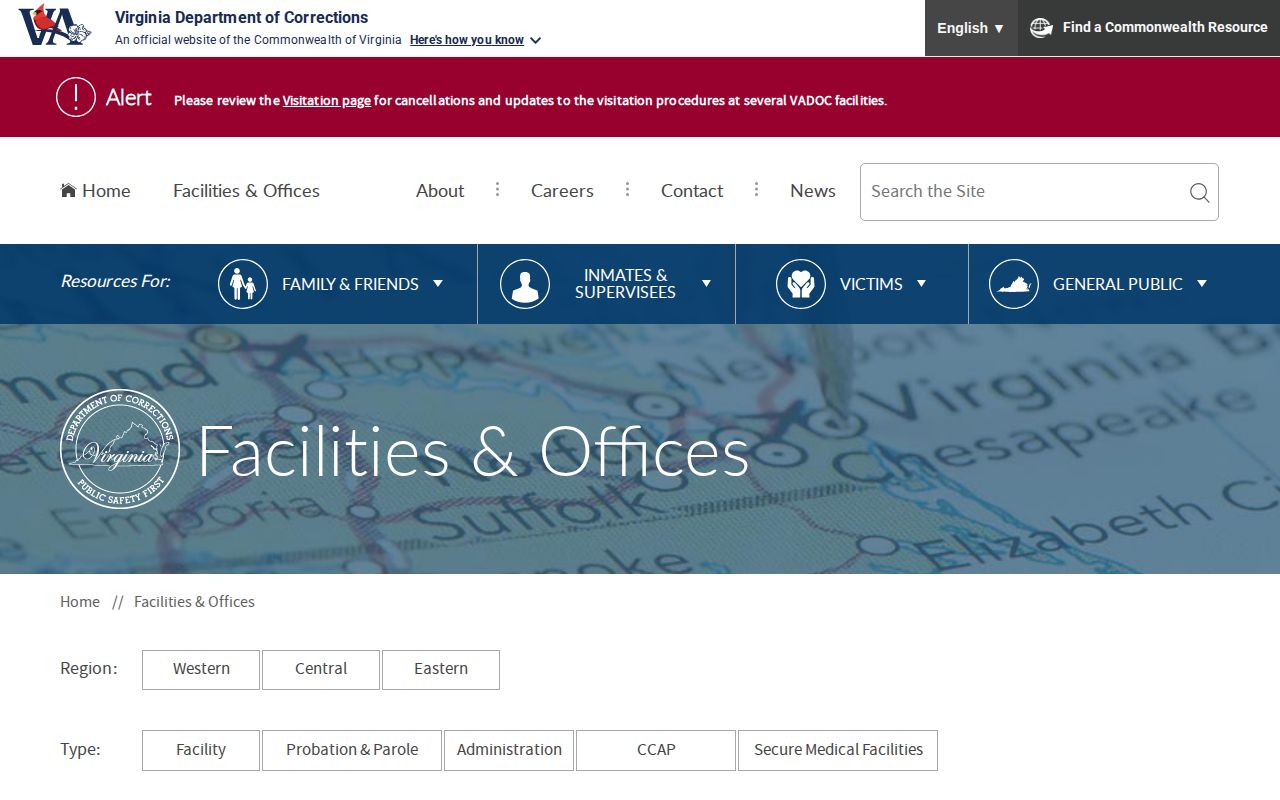
Confirm current contact information through VADOC before travel or document delivery because office listings can change.
Halifax Release System Collision
Two local names can easily send a search down the wrong path. Halifax County Adult Detention Center is the BRRJA regional jail on Blue Ridge Lane. Halifax Correctional Unit is the VADOC state institution on Farm Road. The first uses the local JailTracker inquiry, Virginia Jail VINE, and BRRJA records. The second uses the statewide VADOC locator, VADOC records, Community Corrections, and the Department's NAAVI notification process.
A person leaving HCADC for Halifax Correctional Unit was transferred, not released. A person leaving Halifax Correctional Unit for South Boston District 8 may be in the community while still supervised. VADOC's locator can sometimes show a state-responsible person in a local or regional jail before physical movement to prison, so appearances in both systems do not prove two separate releases. Follow the facility, operator, status, and destination on each record.
The HCADC release record page explains the BRRJA branch. For a person who only had a local booking, do not substitute the VADOC locator for the BRRJA entry. For a state sentence, do not use the live HCADC roster as the release archive. The two systems can describe consecutive custody episodes, and the records should be read in that sequence.
- BRRJA
- The regional jail authority that operates HCADC and keeps its jail custody records.
- VADOC
- The state department that operates Halifax Correctional Unit and computes state terms.
- Parole
- Community service of an eligible sentence after a Board decision.
- Discharge
- The end of the relevant VADOC term, distinct from a transfer.
Halifax Unit Release Day
VADOC publishes a specific state-facility process. Release occurs by 11:59 p.m. on the release date, weather permitting. That is a deadline, not a promised pickup appointment. Staff review the applicable release order or supervision conditions, and signatures document that exchange. Personal-property staff return property and collect state-issued prison clothing. Clothing may be supplied if needed. Medical staff may provide up to 30 days of discharge medicine and needed supplies when applicable.
The business office returns the person's offender-pay balance. Unless a detainer applies, VADOC says it adds enough to bring a lower balance to $25. Funds posted later are forwarded within five business days. These rules describe VADOC facility release and should not be applied to HCADC. The screenshot below links to Virginia Code § 53.1-31.4, which addresses identity documents for qualifying prisoners confined for at least 90 days who lack them.
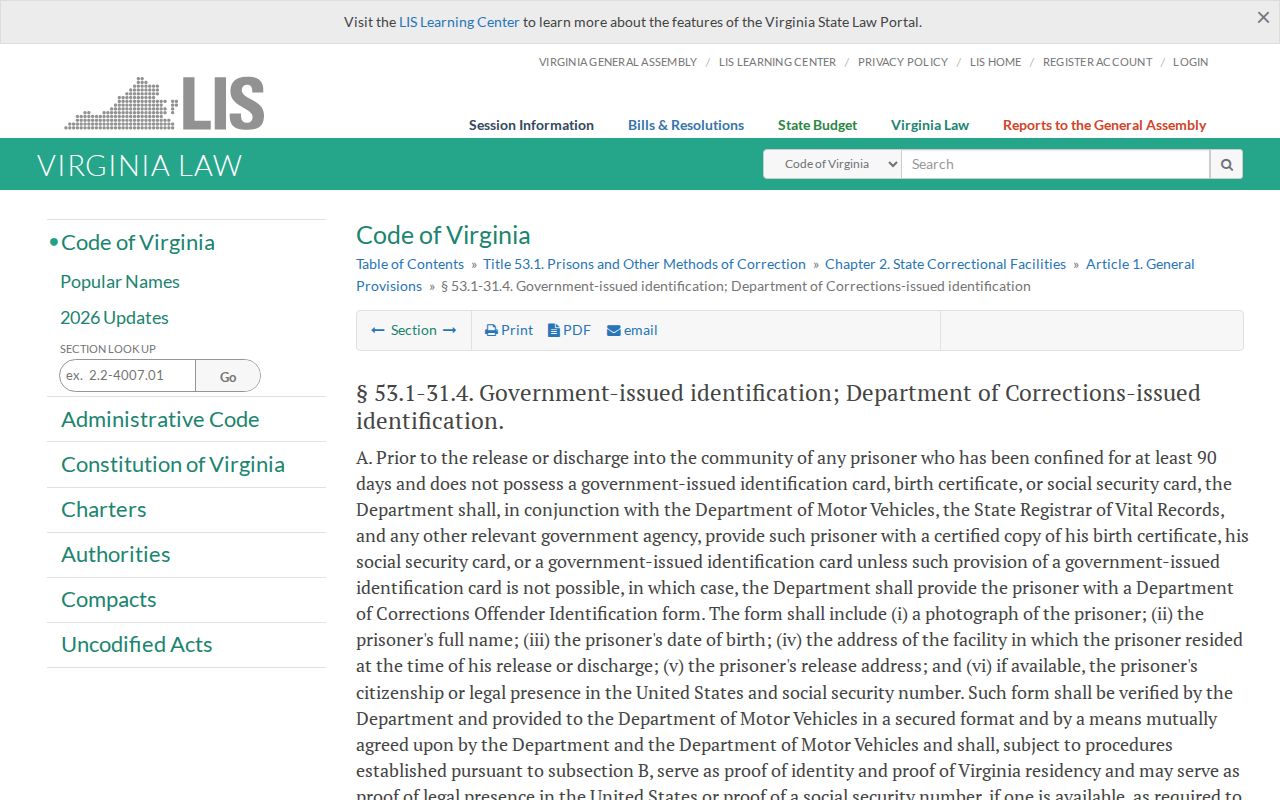
The law adds an identification-document process to the release plan, but it does not prove the release date for a named person.
Note: The state release deadline is not a pickup appointment, and weather or a detainer can change the expected exit.
A person who requests medical records at least 60 days before release can receive a copy within 30 days of release under VADOC's stated process. Release documents, property, funds, medicine, and identity materials each solve a different exit need. None changes the need to verify whether supervision or another hold follows the prison term.
Halifax Unit Release Transportation
VADOC says the business office may arrange bus transportation when needed. This is a documented route for a Halifax Correctional Unit release, not a known HCADC service. Transportation planning should begin with the facility because the release must still be processed, weather can affect timing, and a detainer can redirect the person to another custodian. A planned bus trip does not prove unrestricted community release.
An ICE detainer shows why a calculated term end and arrival home can differ. ICE describes a detainer as a request that another agency give notice before release and keep custody for up to 48 hours beyond the point when the person would otherwise be released so ICE can assume custody. If that happens, the person has left VADOC's institution for immigration custody. The event is a transfer, even though the VADOC sentence may have reached its end.
Other warrants, court orders, or custodial claims can create the same basic issue. Read the destination on the release paperwork and use the receiving authority's official locator. Halifax County has no identified federal prison or dedicated ICE detention center, but a person can still be moved outside the county. Release-day transportation is relevant only after those legal holds are resolved.
Note: Ask the facility about actual pickup or transportation instructions instead of treating the 11:59 p.m. deadline as an appointment.
Halifax Unit Release Parole
Virginia abolished discretionary parole for most felony offenses committed on or after January 1, 1995, subject to statutory exceptions. Older eligible sentences and narrow statutory categories still require case-specific review. The parole eligibility statute varies by commitment history and contains special rules and exclusions. It is not safe to estimate eligibility from conviction date or sentence length alone.
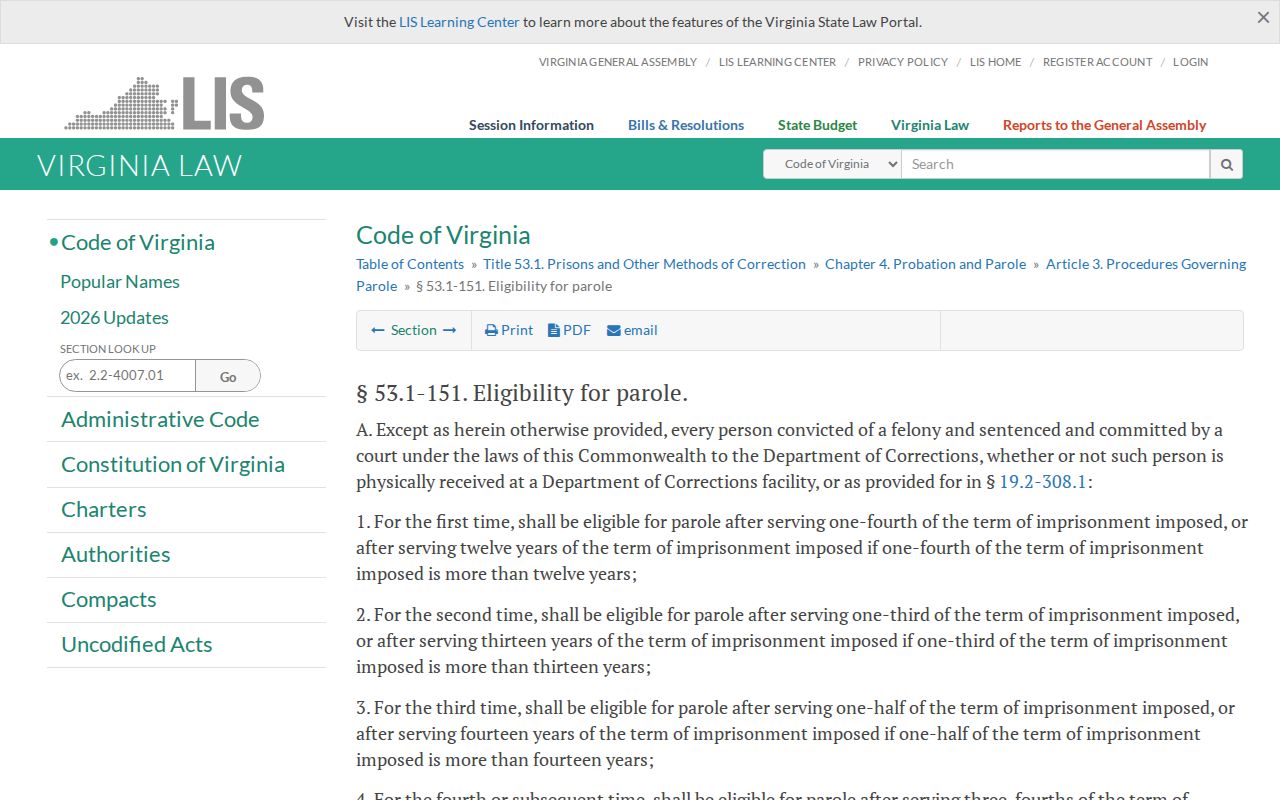
The statute supplies the legal framework, while the Virginia Parole Board publishes the actual decision record for an eligible case.
A Board grant does not equal same-day release. VADOC must complete release planning, identify approved supervision, prepare documents, and resolve detainers. The Board decides parole; VADOC Community Corrections supervises it. South Boston District 8 serves Halifax, Lunenburg, Mecklenburg, and South Boston, but the responsible district follows approved residence and case assignment rather than conviction county alone.
When the VADOC locator shows a district office, the person may be out of the institution but still under supervision. Office staff may not disclose confidential case details. A final discharge should be confirmed through the relevant VADOC record rather than inferred from absence in a public search. This distinction answers both questions that matter: whether institutional custody ended and whether state supervision continues.